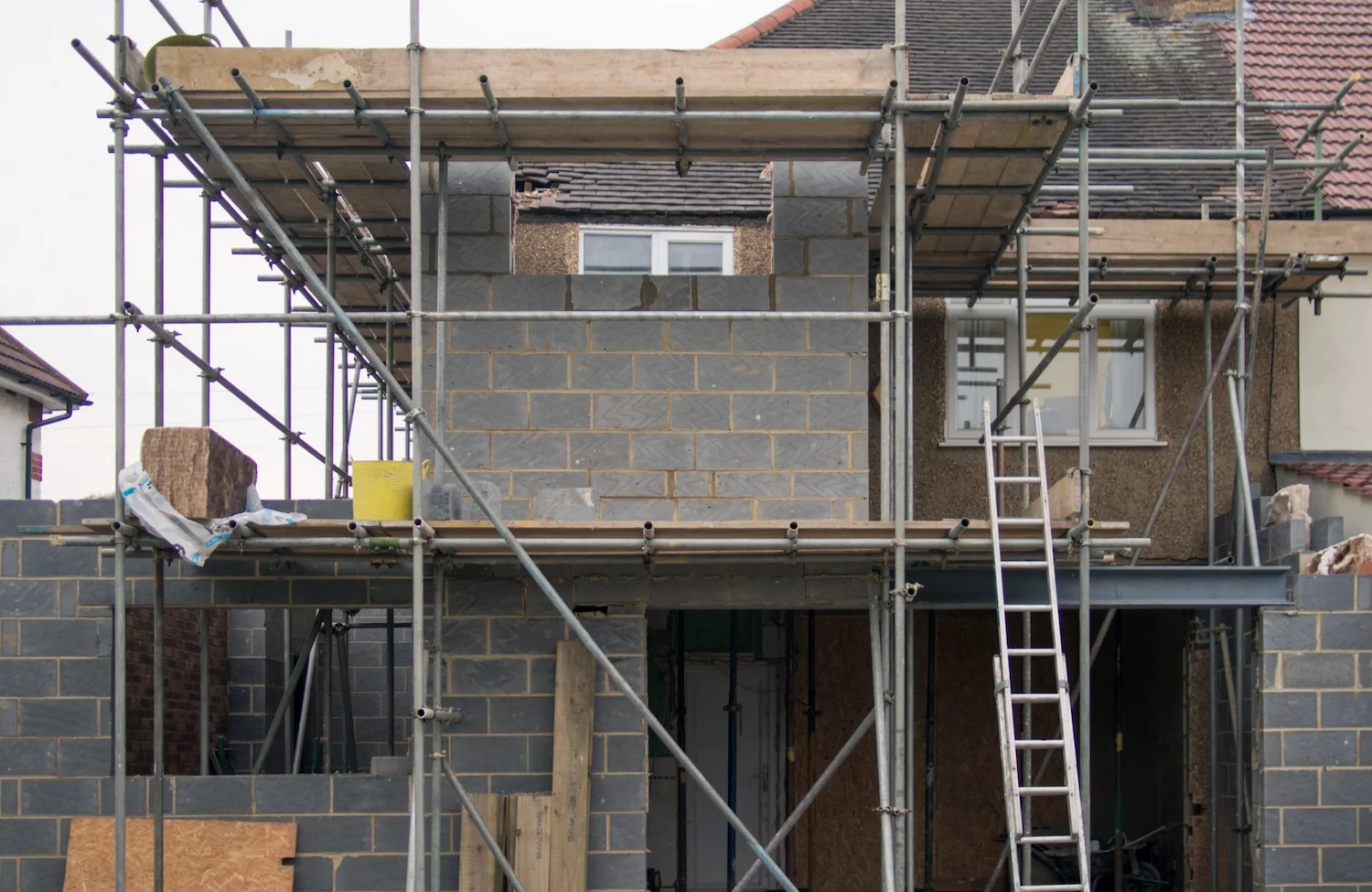
Concrete masonry brick, also called concrete masonry units or CMUs, is a cement-and-aggregate manufactured unit used widely in commercial, industrial, and institutional construction in Ontario. It differs from clay brick in composition, manufacturing process, and structural application, and is governed by specific provisions of the Ontario Building Code. Stone Haven Developments provides commercial masonry services across Southwestern Ontario, including structural and veneer concrete masonry work on commercial and industrial builds.
What Is Concrete Masonry Brick and How Is It Different from Clay Brick?
Concrete masonry brick is a manufactured masonry unit made from Portland cement, aggregate, and water, compressed and cured rather than fired in a kiln. The term CMU, short for concrete masonry unit, is the industry standard designation. Concrete masonry brick differs from clay brick in several important ways: it is denser and heavier per unit, it has a more uniform colour and texture, and it achieves its strength through hydraulic cement curing rather than vitrification. The Canadian Standards Association publishes CSA A165, the standard governing concrete masonry units produced and sold in Canada, including specifications for compressive strength, water absorption, and dimensional tolerances.
In Ontario commercial construction, concrete masonry brick is used in applications where high compressive strength, fire resistance, and dimensional consistency are required. Stone Haven Developments works with concrete masonry on commercial projects across Southwestern Ontario, including load-bearing wall systems, fire separation assemblies, and industrial infill construction.
Where Is Concrete Masonry Brick Used in Ontario Commercial Construction?
Concrete masonry brick is specified for commercial and industrial applications based on its structural, fire, and acoustic performance rather than its appearance. The most common commercial applications in Ontario include:
- Load-bearing wall systems: Concrete masonry brick is used in single and multi-wythe load-bearing wall assemblies for warehouses, manufacturing facilities, and low-rise commercial buildings where high compressive loads must be transferred to the foundation.
- Fire separation walls: The Ontario Building Code requires fire-rated wall assemblies between occupancies, and concrete masonry brick assemblies achieve fire resistance ratings of one to four hours depending on the thickness and grout fill pattern.
- Shaft and stair enclosures: Elevator shafts, stair cores, and mechanical rooms in commercial buildings frequently use concrete masonry brick for structural integrity and fire resistance.
- Retaining and site walls: Concrete masonry brick is used for commercial retaining walls, loading dock surround structures, and grade separation structures where high lateral loads are anticipated.
- Infill and partition walls: Non-load-bearing interior partitions in commercial and industrial buildings use concrete masonry brick for acoustic separation and impact resistance.
What Does the Ontario Building Code Require for Concrete Masonry in Commercial Buildings?
The Ontario Building Code governs the use of concrete masonry in commercial construction under Part 4 structural provisions and Part 3 fire protection requirements. Structural masonry design in commercial buildings in Ontario must comply with CSA S304, the Canadian standard for design of masonry structures, which sets out the engineering requirements for reinforced and unreinforced masonry wall systems. Fire resistance ratings for concrete masonry assemblies are established through tested assembly configurations published in the National Building Code of Canada and recognized by the Ontario Building Code.
Commercial projects involving structural concrete masonry in Ontario require drawings stamped by a licensed structural engineer confirming that the wall design complies with CSA S304 and that the specified CMU meets the strength and absorption requirements of CSA A165. Building permit applications for commercial masonry construction must include these documents before a permit is issued.
How Is Concrete Masonry Brick Specified for Commercial Projects?
Concrete masonry brick for commercial construction in Ontario is specified by compressive strength class, nominal face dimensions, hollow or solid configuration, and whether it will be used in a grouted or ungrouted assembly. CSA A165 establishes three strength grades for concrete masonry units used in Canada. The structural engineer of record specifies the required grade based on the calculated wall loads. Hollow units are typically used where vertical reinforcing steel and grout fill will be incorporated into the design. Solid units or partially grouted hollow units are used where acoustic performance or specific fire ratings require higher mass. Stone Haven Developments coordinates with structural engineers on commercial masonry specifications for every project management engagement involving structural masonry.
What Are the Structural Advantages of Concrete Masonry Brick in Commercial Builds?
Concrete masonry brick offers several structural advantages in commercial construction that make it a preferred material for load-bearing and fire separation applications. Its high compressive strength allows it to carry significant vertical loads without the need for additional structural framing in many building types. Its thermal mass slows heat transfer through the wall assembly, reducing peak cooling loads in commercial buildings. Its non-combustible composition allows it to form fire separation assemblies without additional fireproofing coatings or membrane systems. When reinforced with vertical steel and grouted cores, concrete masonry brick walls achieve ductile behaviour under seismic loading, which is relevant for commercial buildings in areas of Ontario with seismic design requirements. Stone Haven Developments has delivered commercial masonry projects across Southwestern Ontario, including commercial retaining walls and structural masonry for industrial clients.
What Should Commercial Developers Look for in a Concrete Masonry Contractor?
Selecting a contractor for commercial concrete masonry work in Ontario involves verifying experience with structural masonry specifically, not just residential brickwork. A contractor with residential experience in clay brick installation is not automatically prepared for reinforced concrete masonry wall systems that require precise vertical core alignment for steel placement, controlled grout lift heights to prevent blowouts, and adherence to the inspection and testing requirements of CSA S304 and the project specifications. Stone Haven Developments brings commercial masonry experience to every project, combining structural masonry capability with their broader general contracting and project management capacity.
Developers should also confirm that the masonry contractor carries adequate commercial general liability insurance and has workers compensation coverage for all workers on the commercial site. Ontario commercial construction projects require contractors to comply with applicable Occupational Health and Safety Act requirements, including site safety plans for work above specified heights and on projects with multiple trades working simultaneously.
What Commercial Developers in Ontario Should Know About Concrete Masonry
Concrete masonry brick is a structurally versatile, fire-resistant, and cost-effective material for commercial construction in Ontario when correctly specified and installed. The performance advantages it offers in load-bearing and fire separation applications make it a standard specification on many industrial, commercial, and institutional building types across the province.
Selecting a masonry contractor with documented commercial masonry experience, a clear understanding of CSA A165 and S304 requirements, and a track record of delivering structural masonry on schedule and within scope is the most important step a developer can take to protect the project from rework, inspection failures, and schedule delays.
Discuss Your Commercial Masonry Project With Stone Haven
Stone Haven Developments provides commercial masonry and general contracting services across Southwestern Ontario for developers, property owners, and general contractors planning new commercial and industrial construction. Reach out to the Stone Haven team to discuss your commercial masonry scope, timeline, and project requirements.
Frequently Asked Questions
1. What is the difference between concrete masonry brick and concrete block?
Concrete masonry brick and concrete block are both concrete masonry units but differ in nominal dimensions and typical application. Concrete masonry brick is smaller in face dimensions and is closer in size to clay brick, while standard concrete block, also called CMU block, is larger, typically 200mm by 200mm by 400mm nominal. Both are manufactured from Portland cement, aggregate, and water. Concrete block is the more common structural masonry unit in Ontario commercial construction. Stone Haven Developments works with both units depending on the application and structural requirement. See their commercial masonry services for more detail.
2. Does concrete masonry brick require reinforcing steel in Ontario commercial buildings?
Whether reinforcing steel is required depends on the structural design. Unreinforced concrete masonry walls are permitted under CSA S304 for low-rise applications meeting specific height and load limits. Most commercial and industrial concrete masonry walls in Ontario are reinforced with vertical steel bars grouted into the hollow cores, particularly where seismic design requirements apply or where the wall height and loading conditions exceed the limits for unreinforced design. The structural engineer of record makes this determination based on the specific project conditions. Learn more about types of masonry construction.
3. How does concrete masonry brick compare to steel framing for commercial construction in Ontario?
Concrete masonry brick and steel framing are not direct substitutes in most commercial buildings. They serve different structural and functional roles. Concrete masonry is preferred for fire separation walls, load-bearing partitions, and exterior walls where thermal mass and fire resistance are priorities. Steel framing is preferred for long-span structures, buildings with large open floor plans, and high-rise construction where weight and speed of erection are critical. Many Ontario commercial buildings use both systems together, with concrete masonry for core and perimeter walls and steel for roof and floor framing. See how masonry and concrete blocks compare in Ontario.
4. What fire rating can concrete masonry brick achieve in Ontario?
Concrete masonry brick assemblies can achieve fire resistance ratings from one hour for thin, ungrouted walls to four hours or more for thick, fully grouted assemblies, depending on the unit dimensions, core fill configuration, and any applied finishes. Tested assembly ratings for concrete masonry are published in the National Building Code of Canada. The structural engineer and fire protection engineer of record confirm the required rating and specify the assembly configuration that achieves it for each project. Learn what Ontario homeowners and builders need to know about masonry permits.
5. Can concrete masonry brick be used for exterior walls on Ontario commercial buildings?
Yes. Concrete masonry brick is used for exterior wall cladding and structural exterior walls on commercial and industrial buildings across Ontario. When used as an exterior wall assembly, the design must address thermal performance, moisture management, and freeze-thaw durability. Cavity wall assemblies with concrete masonry brick veneer and insulated backup framing are common on commercial buildings in Ontario where the building envelope must meet energy efficiency requirements. Stone Haven Developments designs and installs exterior masonry assemblies for commercial clients, coordinating with envelope consultants where required. Learn more about exterior masonry waterproofing.
Key Takeaways
- Concrete masonry brick, also called CMU, is manufactured from Portland cement, aggregate, and water, and achieves its strength through curing rather than kiln firing.
- CSA A165 is the Canadian standard governing concrete masonry units, and CSA S304 is the design standard for masonry structures in Ontario commercial construction.
- Common commercial applications include load-bearing walls, fire separation assemblies, shaft and stair enclosures, retaining walls, and acoustic partitions.
- Structural concrete masonry in Ontario commercial buildings typically requires vertical steel reinforcing in grouted cores and engineering drawings stamped by a licensed structural engineer.
- The Ontario Building Code references tested assembly ratings for concrete masonry fire resistance, with ratings from one to four hours available depending on assembly configuration.
- Contractors for commercial masonry must have experience with structural CMU systems, not just residential clay brick, and must carry appropriate commercial insurance and safety compliance.
- Stone Haven Developments provides commercial masonry and general contracting services across Southwestern Ontario for industrial, commercial, and institutional construction projects.