Foundation repair covers a range of interventions designed to address structural deterioration, cracking, settlement, and moisture damage in residential and commercial foundations. In Ontario, where freeze-thaw cycles, clay soils, and aging housing stock create compounding stress on foundation structures, catching problems early and addressing them correctly is one of the most important property maintenance decisions an owner can make. This guide covers the warning signs, common repair methods, and what a qualified assessment actually involves.
That Crack in Your Foundation Is Not Always Small
Most Ontario homeowners notice a crack in their foundation wall at some point. The instinct is often to watch it and see whether it changes. Sometimes that is a reasonable approach. Hairline shrinkage cracks in poured concrete that have been stable for years pose minimal structural risk. But horizontal cracks, stair-step cracks through mortar joints in block foundations, and cracks that show displacement, widening, or active moisture infiltration are a different matter entirely. They are telling you something is changing with your foundation, and waiting typically makes the repair more involved and more expensive.
Foundations in Southwestern Ontario face a specific and recurring set of stressors. The freeze-thaw cycle drives water into cracks during the shoulder seasons and expands them from the inside as temperatures drop. Clay-heavy soils throughout the Stratford, Kitchener, Waterloo, and Guelph areas swell when wet and shrink when dry, creating lateral pressure variations that work against foundation walls over decades. Older homes built on rubble stone or unreinforced concrete block have fewer built-in tolerances for this kind of movement than modern poured concrete construction.
Understanding what you are looking at, and knowing when to call for a professional assessment, is what separates manageable repairs from major structural remediation.
Warning Signs That Your Foundation Needs Professional Attention
The following signs indicate that a professional foundation assessment is warranted. Some require urgent attention. Others allow time for a scheduled inspection. None of them should be ignored.
- Horizontal cracks in foundation walls: This is the most serious crack type. Horizontal cracking in block or poured concrete foundations typically indicates lateral pressure from saturated soil pushing against the wall from outside. These cracks can indicate active structural failure and require immediate professional evaluation.
- Stair-step cracks through mortar joints: Common in concrete block and brick foundations, stair-step cracking follows the weakest path through the mortar joints. It often indicates differential settlement, meaning one section of the foundation is moving relative to another.
- Vertical cracks wider than 6mm: Narrow vertical cracks from concrete shrinkage are common and often benign. Cracks that have widened over time, show displacement, or are larger than 6mm at any point require assessment to determine the cause and whether structural intervention is needed.
- Bowing or bulging foundation walls: Inward displacement of the foundation wall, even 10 to 15mm, indicates that lateral soil pressure is exceeding the wall’s resistance. This is a structural problem that worsens over time without intervention.
- Doors and windows that no longer operate correctly: When frames rack and doors or windows stick, jam, or develop gaps, it often reflects movement in the structure that originates at the foundation level.
- Visible settlement or floor slope: Floors that slope, crack along seams, or show evidence of differential movement indicate that the foundation is not providing a level, stable bearing surface.
- Water infiltration at the wall face or floor-wall joint: Active moisture entry through the foundation is both a symptom of structural issues and a cause of further deterioration if left unaddressed.
Common Foundation Repair Methods Used in Ontario
The repair method applied depends entirely on the type of deterioration identified, the foundation material, the cause of the problem, and the extent of the damage. No single repair method is appropriate for every situation, and a qualified assessment is required before any recommendation can be made accurately.
Crack Injection
Crack injection involves filling foundation cracks with either polyurethane foam or epoxy resin injected under pressure through ports installed along the crack. Polyurethane foam expands upon injection and cures to a flexible material that accommodates minor movement, making it suited for non-structural cracks with active moisture. Epoxy injection cures to a rigid bond stronger than the surrounding concrete and is used for structural cracks where the goal is to restore the wall to its original load-bearing capacity. The correct product selection depends on whether the crack is active, whether moisture is present, and whether the crack is structural in nature.
Carbon Fibre Strapping
For bowing or inward-deflecting foundation walls, carbon fibre straps bonded vertically to the interior wall face provide restraint against further movement. The straps are mechanically fastened at the top plate and footing and resist the lateral soil pressure that is causing the wall to bow. Carbon fibre strapping is a relatively non-invasive repair that does not require excavation and is effective when the wall deflection is still within a range where the existing structure can be stabilized without replacement. It does not correct existing displacement but prevents further movement.
Wall Anchors and Plate Systems
Where deflection has exceeded the range that strapping alone can address, wall anchor systems extend from the interior foundation wall through the soil to a steel plate anchored in undisturbed soil beyond the active pressure zone. Over time, anchor bolts can be incrementally tightened to gradually bring the wall back toward its original position. This method requires exterior soil conditions suitable for anchor installation and is often used on walls where the deflection is moderate to significant.
Foundation Underpinning
When a foundation has settled unevenly, lost bearing capacity, or was originally built on inadequate footing conditions, underpinning extends the foundation downward to reach a stable bearing layer. Mass concrete underpinning involves sequentially excavating beneath the existing footing and filling with new concrete. Helical and resistance piers are driven or screwed into stable soil below the active movement zone and transfer the structural load past the unstable zone to bedrock or competent bearing material. Underpinning is the most involved and expensive of the common repair methods and is warranted when settlement is ongoing or the original foundation depth is insufficient.
Masonry Repointing and Block Repair
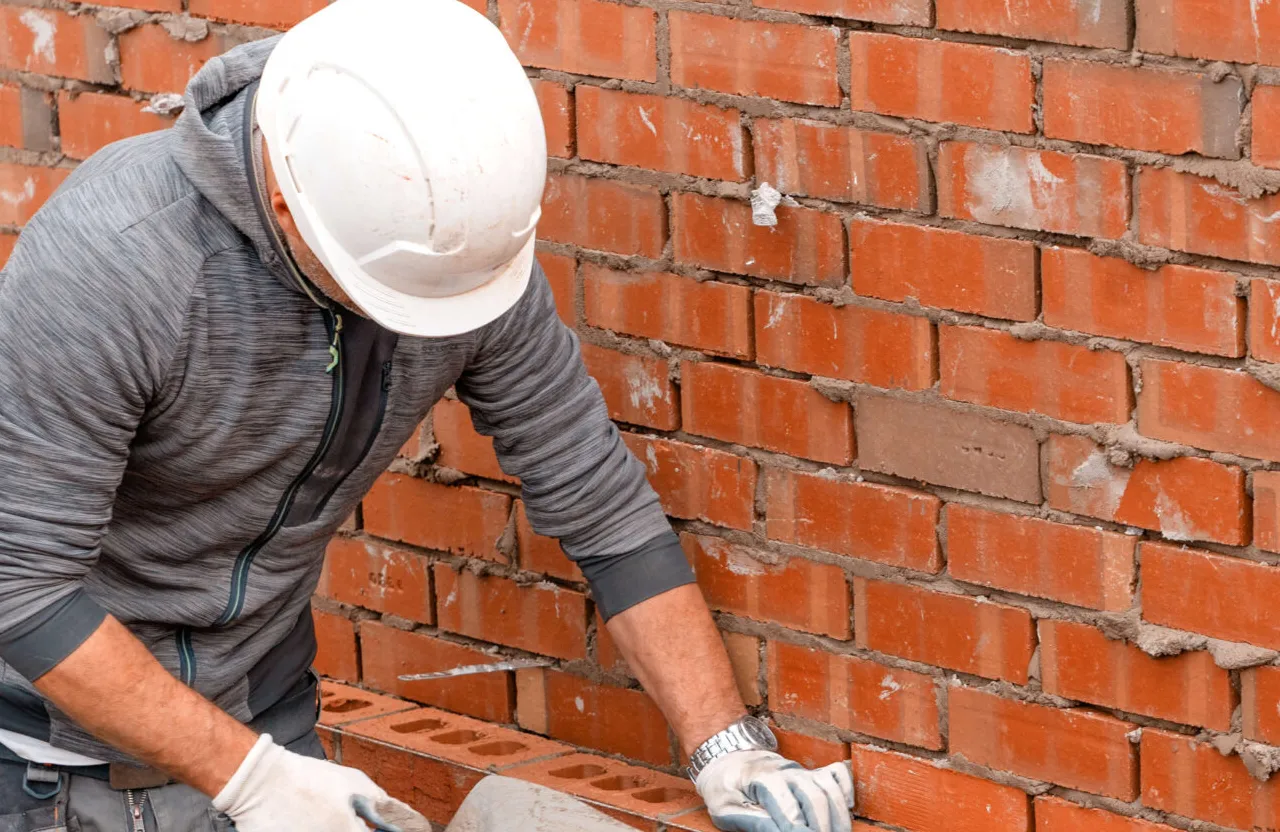
For foundations built of concrete block or brick, deteriorated mortar joints are a primary pathway for water infiltration and the source of structural weakening when significant joint loss has occurred. Repointing involves removing deteriorated mortar to an adequate depth and replacing it with mortar matched to the original composition and hardness. Block repair addresses spalled, cracked, or failed individual units. Stone Haven Developments specializes in this work, performing masonry repair as a standalone service and as part of broader foundation waterproofing projects. Review our masonry services for detail on what this work involves.
How Stone Haven Approaches Foundation Repair
Stone Haven Developments begins every foundation project with an honest assessment of what is actually happening with the structure. The company’s 17 years of masonry and construction experience across residential, commercial, and industrial properties in Southwestern Ontario means the team understands how different foundation types behave, what the common failure modes are in Ontario’s climate, and how to distinguish cosmetic issues from structural ones.
Foundation repair at Stone Haven is approached as a masonry and structural discipline, not just a crack-filling exercise. When assessment reveals moisture alongside structural issues, both are addressed together so the repair is complete. Where foundation work is part of a larger renovation or remediation project, coordination across trades is managed through project management services that keep the property owner working with a single point of accountability.
For properties where the full structural picture is unclear, a formal masonry audit provides a thorough evaluation before any repair scope is defined.
Why Southwestern Ontario Property Owners Choose Stone Haven
Stone Haven Developments was built on the experience and values of founder Matthew Howe, a mason who has spent over 17 years working across residential, commercial, and industrial construction in the Kitchener-Waterloo area and beyond. The company operates as a full-service general contractor based in Stratford, serving communities throughout Southwestern Ontario.
Clients choose Stone Haven for foundation work because the assessment is honest, the scope reflects what the property actually needs, and the work is done properly. The company does not upsell to repair methods that are not warranted, and it explains the reasoning behind every recommendation clearly. Completed work is backed by a rework policy of up to two years depending on the project scope.
Service areas include Stratford, Perth County, the Waterloo Region, Guelph, Hamilton, London, Burlington, Oakville, and the broader Southwestern Ontario corridor. Explore services through our Stratford and Ontario locations.
The Right Repair Starts with the Right Assessment
Foundation problems in Ontario are manageable when they are identified and addressed before they progress. The combination of freeze-thaw stress, clay soil pressure, and aging infrastructure means that waiting on a foundation concern rarely makes it simpler or less expensive to fix. The first and most important step is always a thorough, qualified assessment that identifies what is actually happening before any repair work begins.
Stone Haven Developments provides foundation assessments for residential, commercial, and industrial properties across Southwestern Ontario. Contact the team at (519) 807-7529 or reach Stone Haven online to schedule a site visit.
Frequently Asked Questions
1. How do I know if my foundation crack is serious?
Horizontal cracks, cracks with visible displacement between the two sides, cracks that are widening over time, and cracks with active water infiltration are the most serious types and require professional evaluation promptly. Hairline vertical cracks in poured concrete that are stable, dry, and consistent with concrete shrinkage are typically lower priority. When in doubt, a professional assessment is always the correct response, because the cost of assessment is minimal compared to the cost of a repair that waited too long.
2. How much does foundation repair cost in Ontario?
Foundation repair costs in Ontario range widely depending on the type of repair required, the size and accessibility of the foundation, and the extent of deterioration. Crack injection repairs for individual cracks can be a few hundred to a few thousand dollars. Carbon fibre strapping installations for bowing walls typically range from a few thousand to the mid-five figures depending on wall length and deflection. Underpinning and major structural repairs are the most expensive category and are quoted based on a site-specific engineering assessment. Written quotes based on a direct inspection are the only reliable basis for cost planning.
3. Can I repair a foundation crack myself?
Some surface crack sealants are available at hardware stores for minor, non-structural hairline cracks, but these products typically seal the surface without addressing the depth of the crack and do not stop moisture migration through an active crack. For any crack that shows signs of structural movement, displacement, widening, or moisture infiltration, professional assessment and repair is the appropriate course of action. Improper repair attempts on structural cracks can mask warning signs and make subsequent professional assessment more difficult.
4. How long does foundation repair take?
Crack injection repairs on individual cracks are typically completed in a single day. Carbon fibre strapping installations for a full basement wall can be completed in one to two days. More extensive work involving underpinning, excavation, or significant masonry repair takes longer depending on scope and site conditions. A contractor providing a written quote should also provide a realistic timeline as part of the proposal so the property owner can plan accordingly.
5. Does foundation repair require a permit in Ontario?
Permit requirements for foundation repair in Ontario depend on the scope of work and the municipality. Structural repairs, including underpinning, wall anchor installation, and significant masonry reconstruction, are more likely to require a permit than crack injection or repointing. A qualified contractor familiar with local building codes should confirm permit requirements before work begins. Stone Haven Developments operates across multiple municipalities in Southwestern Ontario and is familiar with the applicable regulatory requirements in its service areas.
6. Will foundation repair increase my home’s value?
Documented foundation repairs by a qualified contractor improve a property’s structural integrity and can reduce the risk of issues arising during a home inspection when the property is sold. Buyers and their inspectors treat unresolved foundation issues as significant negotiating factors, and properties with documented professional repairs in this area are generally viewed more favourably than those with unaddressed concerns. Stone Haven cannot provide guarantees on property value outcomes, but maintaining a structurally sound foundation is a fundamental component of preserving your property’s long-term condition.
Ready to Get a Clear Picture of Your Foundation?
Stone Haven Developments provides thorough foundation assessments for residential, commercial, and industrial properties across Stratford, Kitchener, Waterloo, Guelph, Hamilton, and the surrounding Southwestern Ontario region. Call (519) 807-7529 or reach Stone Haven online to schedule a site visit.
Key Takeaways
- Foundation repair covers crack injection, carbon fibre strapping, wall anchors, underpinning, and masonry repointing, each suited to specific damage types.
- Horizontal cracks are the most serious warning sign and require immediate professional evaluation; hairline vertical shrinkage cracks are typically lower priority.
- Ontario’s freeze-thaw cycles and clay-heavy soils throughout Stratford, Kitchener, Waterloo, and Guelph create compounding stress on foundation structures over decades.
- No single repair method is appropriate for every situation; a qualified assessment determines which approach is warranted based on what the inspection reveals.
- Stone Haven Developments approaches foundation repair as a masonry and structural discipline, addressing moisture and structural issues together rather than separately.
- The company backs completed work with a rework policy of up to two years depending on the project scope.
- Stone Haven serves Stratford, Perth County, Waterloo Region, Guelph, Hamilton, London, Burlington, Oakville, and surrounding Southwestern Ontario communities.