Interlock patio installation is one of the most practical outdoor upgrades for Ontario property owners, offering a durable, frost-resistant surface that holds up through seasonal weather changes. This guide covers material benefits, the construction process, cost factors, and what separates a long-lasting interlock patio from one that shifts or settles within a few years.
Why Interlocking Stone Outperforms Poured Concrete in Ontario
Poured concrete slabs have one significant weakness in Ontario: they cannot flex. When the ground beneath them contracts in winter and expands in spring, the rigid slab cracks. Once a crack forms, it admits water, which freezes and widens the gap, and the cycle accelerates from there.
Interlocking pavers work differently. Each unit is independent, allowing the surface to accommodate slight ground movement without fracturing. The joints between pavers act as expansion gaps, distributing the stress that would otherwise concentrate in a single crack line. The result is a surface that maintains its integrity across multiple freeze-thaw seasons, provided the base beneath it is properly prepared.
Stone Haven Developments installs interlock patios throughout Southwestern Ontario. Our masonry work covers residential and commercial patio projects built to perform through Ontario’s demanding climate cycles.
Why Choose an Interlocking Stone for Your Patio?
Built for Ontario’s Climate
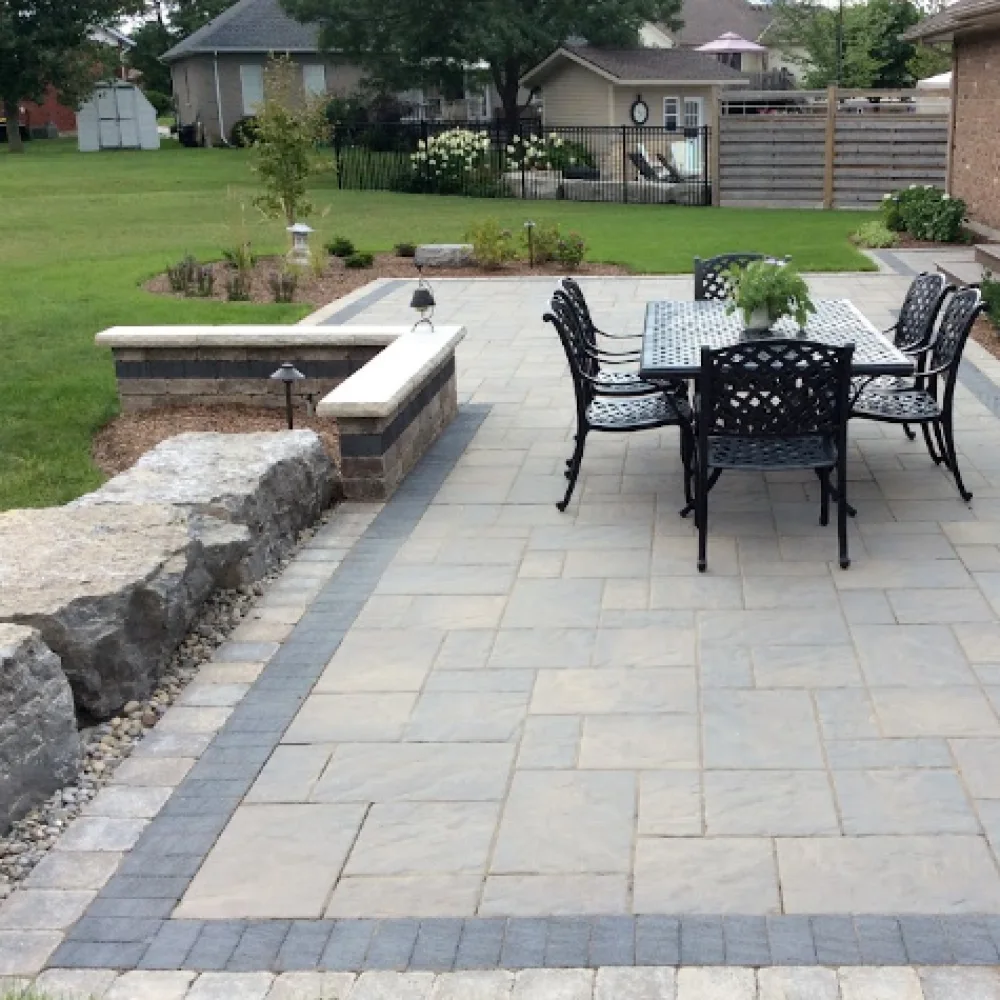
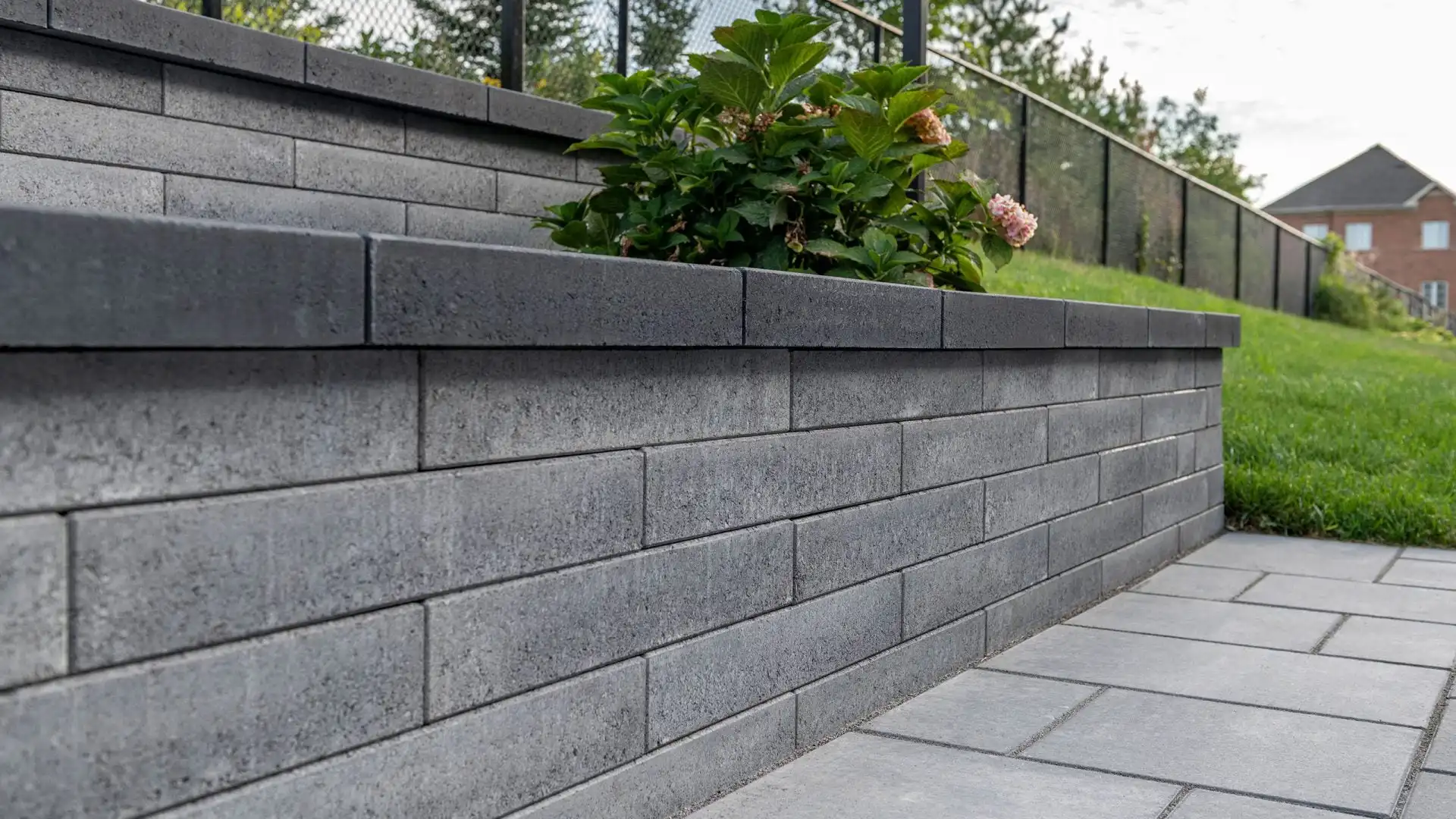
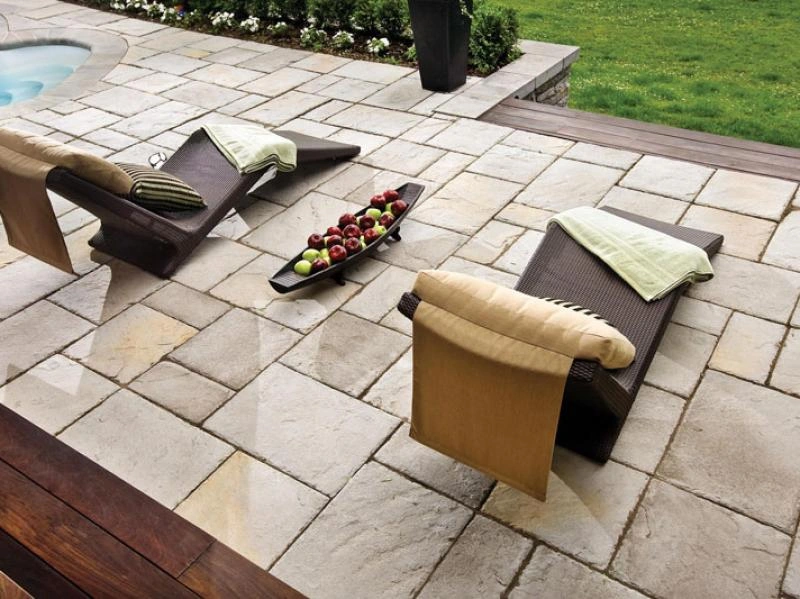
Unlike poured concrete, interlocking pavers are designed to flex slightly with ground movement. This reduces cracking and improves long-term performance during Ontario’s freeze-thaw cycles.
Benefits include:
- Excellent drainage capability
- Reduced cracking compared to concrete slabs
- Easy repairs by replacing individual pavers
- Long-lasting structural integrity
The Foundation Is What the Patio Stands On
The most common failure mode for interlock patios is not the pavers themselves, it is the base beneath them. A base that is too shallow will heave in winter. A base without proper drainage will retain water, which softens the sub-base and causes uneven settling. A base that lacks edge restraints will allow the outer pavers to shift outward over time.
Our installation process addresses each of these variables. We excavate to the appropriate depth for Ontario frost conditions, install a compacted granular base, grade the surface for water runoff, and secure the perimeter with edge restraints before the first paver is placed. Polymeric sand locks the joints after final compaction, resisting weed growth and paver movement.
Types of Interlock Patio Installations We Build
Standard Residential Patios
A well-designed residential patio creates functional outdoor living space directly behind or beside the home. We work with homeowners to determine the most practical layout for their yard size, access points, and intended use, then engineer the base for the specific soil and drainage conditions on site.
Multi-Level Patio Systems
Sloped lots often benefit from multi-level patio designs that incorporate seating walls, steps, and grade transitions. These projects combine interlock paving with structural masonry, and our team coordinates both disciplines. Where grade changes require structural support, we integrate retaining walls into the patio design to manage the elevation change safely.
Commercial Interlock Paving
Commercial interlock paving applications include entry plazas, walkways, parking areas, and outdoor seating zones for commercial properties. Our commercial masonry work applies the same base engineering standards to commercial projects, where higher foot traffic and load demands require extra attention to sub-base depth and edge restraint.
Our Interlock Patio Installation Process
Site Assessment and Design
Every project starts with a site visit to evaluate slope, soil conditions, existing drainage patterns, and layout dimensions. We determine the excavation depth, drainage requirements, and paver layout before any work begins. A clear plan prevents mid-project changes that add cost and delay.
Excavation and Base Installation
We excavate to the correct depth based on the site’s frost exposure and soil type. A compacted granular base is installed in layers, with each layer compacted before the next is added. This creates a stable platform that resists both settlement and frost heaving.
Paver Placement and Alignment
Each interlocking stone is placed and aligned to maintain pattern consistency and surface level accuracy. We work from established reference lines to keep the layout square and the surface plane uniform. Cuts are made cleanly at edges and around obstacles to maintain a professional finish.
Joint Sanding and Final Compaction
Polymeric sand is swept into the joints and the entire surface is compacted to lock pavers in position. The polymeric sand hardens when wet, binding the joints against weed growth and lateral paver movement. We inspect the finished surface for level consistency before the project is closed out.
Popular Interlock Patio Styles in Ontario
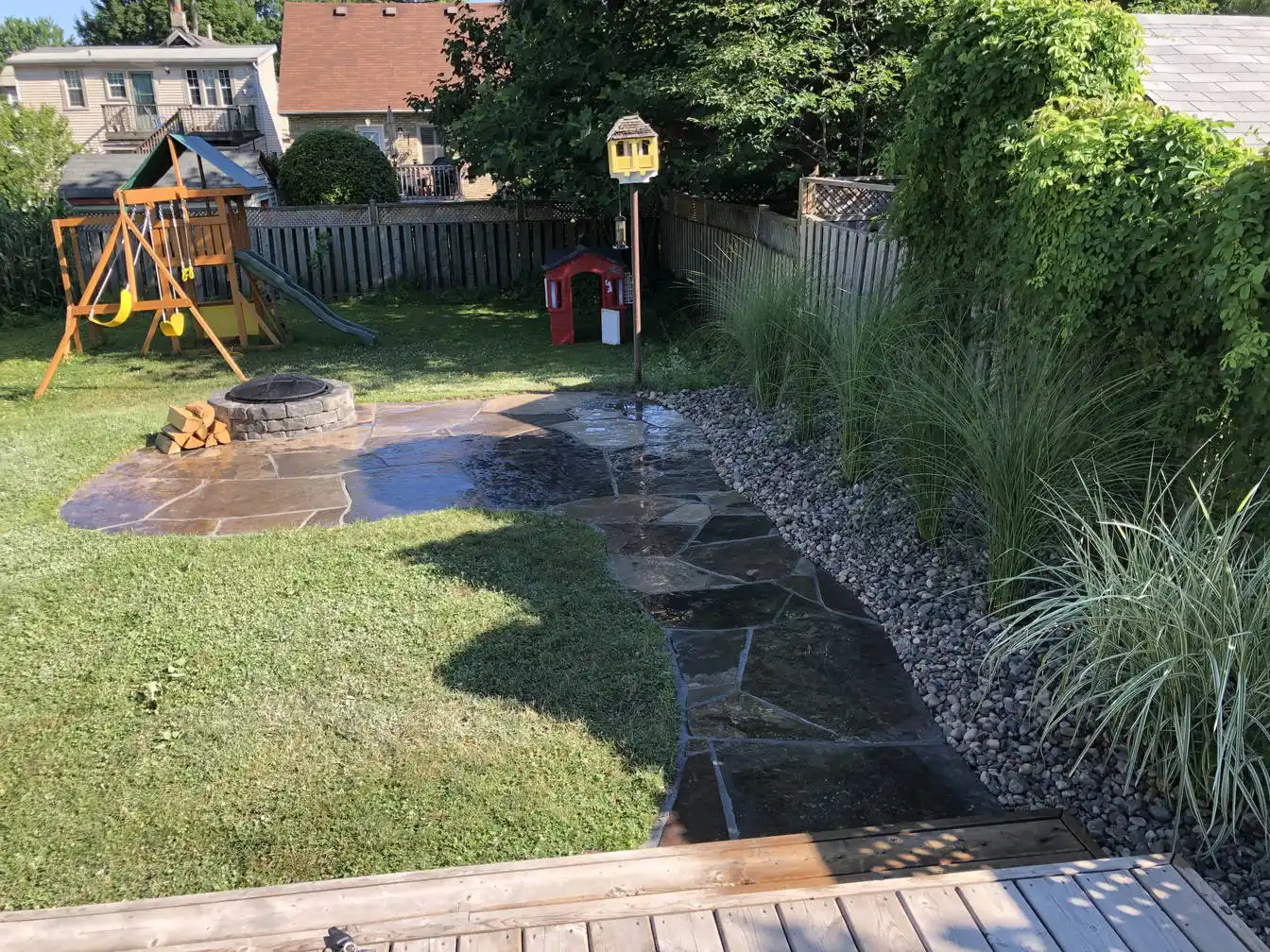

Interlock paving offers more design range than most homeowners expect. Large-format pavers in a running bond pattern create a contemporary look that suits modern homes. Smaller traditional pavers in a herringbone or basketweave pattern work well for properties with a classic or heritage character.
Border accents, contrasting inlays, and integrated steps are popular additions that tie the patio design to the home’s exterior. Curved layouts are achievable with cut pavers and give the patio a more organic, landscaped appearance. We review every design choice for structural suitability before installation begins.
What Does Interlock Patio Installation Cost in Ontario?
Standard interlock patio installation in Ontario typically ranges from $20 to $40 per square foot. Complex layouts, premium paver selections, multi-level designs, or sites with poor drainage or access challenges will fall toward or above the higher end of that range.
Factors that affect pricing include patio size, material selection, site accessibility, drainage requirements, and any additional features such as steps, seating walls, or integrated lighting. A site assessment is the only reliable way to arrive at an accurate project cost.
According to the Canada Mortgage and Housing Corporation, well-constructed exterior improvements are among the most consistent contributors to residential property value. A properly installed interlock patio typically offers a strong return relative to the investment.
Why Professional Installation Matters
Improperly installed interlock patios exhibit predictable failure patterns: uneven settling from inadequate base depth, shifting pavers from missing or failing edge restraints, and joint failure from incorrect sand application. Each of these problems is preventable with proper construction, and each is expensive to correct after the fact.
While most residential patios do not require permits, the Ontario Building Code does set requirements for structures that affect drainage or grade near a building’s foundation. We help property owners understand any applicable requirements before installation begins.
For larger outdoor projects that combine patio installation with landscaping, grading, or structural masonry, our project management team coordinates the full scope so that each element is planned and sequenced correctly.
Build an Outdoor Space That Holds Up
An interlock patio is a practical, long-lasting improvement to any Ontario property. The difference between a patio that lasts 25 years and one that needs repair in five comes down almost entirely to base preparation, drainage, and the skill of the installation crew.
Stone Haven Developments brings the same structural discipline to patio installation that we apply to our new construction projects. Every surface we install is built to perform through Ontario’s climate, not just look good on installation day.
Reach out to Stone Haven to schedule a site assessment and discuss your interlock patio project.
For independent technical reference on paver construction standards, the Masonry Advisory Council publishes detailed guidance on base preparation, joint performance, and long-term paving durability.
Frequently Asked Questions
1. How long does an interlock patio last in Ontario?
With proper base preparation, drainage, and installation, an interlock patio in Ontario can last 25 years or more. The pavers themselves have a long service life; most failures occur in the base, not the surface material.
2. Is interlock better than poured concrete for Ontario patios?
For most Ontario residential applications, interlocking pavers outperform poured concrete over time. They accommodate frost movement without cracking, allow individual units to be replaced if damaged, and drain more efficiently. Poured concrete is less forgiving of ground movement in a freeze-thaw climate.
3. Does an interlock patio need maintenance?
Minimal maintenance is required. Occasional joint re-sanding may be needed after several years as polymeric sand breaks down. Periodic surface cleaning and inspection for any shifted pavers or settled areas keep the patio in good condition.
4. Can individual interlock pavers be replaced if they are damaged?
Yes. One of the practical advantages of interlocking systems is that individual units can be removed and replaced without disturbing the surrounding surface. This makes targeted repairs straightforward compared to repairing poured concrete.
5. Do I need a permit for an interlock patio in Ontario?
Most residential interlock patios do not require a permit, but regulations vary by municipality. Patios that affect grading, drainage near a foundation, or involve structural elements such as retaining walls may have additional requirements. We confirm applicable requirements for each project before construction begins.
6. What is polymeric sand and why does it matter?
Polymeric sand is a jointing material that hardens when wet, locking interlock paver joints against weed growth and lateral movement. It is a critical component of a properly finished interlock surface. Patios installed without it or with incorrect application are prone to joint failure and paver shifting over time.
Start Planning Your Interlock Patio Today
Stone Haven Developments works with residential and commercial property owners across Southwestern Ontario to build interlock patios that are structurally sound, well-designed, and built to last through Ontario’s seasons.
Contact Stone Haven to request a site assessment and get a clear, honest estimate for your interlock patio project.
Key Takeaways
- Interlocking pavers outperform poured concrete in Ontario’s freeze-thaw climate because they flex with ground movement rather than cracking under stress.
- Base preparation is the most critical factor in interlock patio longevity. Inadequate depth, missing drainage, or absent edge restraints are the leading causes of patio failure.
- Standard interlock patio installation in Ontario ranges from $20 to $40 per square foot. Complex designs, premium materials, and difficult site conditions will increase costs.
- Polymeric sand is essential for joint integrity. Patios installed without it are prone to weed growth and paver shifting.
- Most residential patios do not require permits, but projects affecting drainage or grade near a foundation may. Confirm local requirements before construction begins.