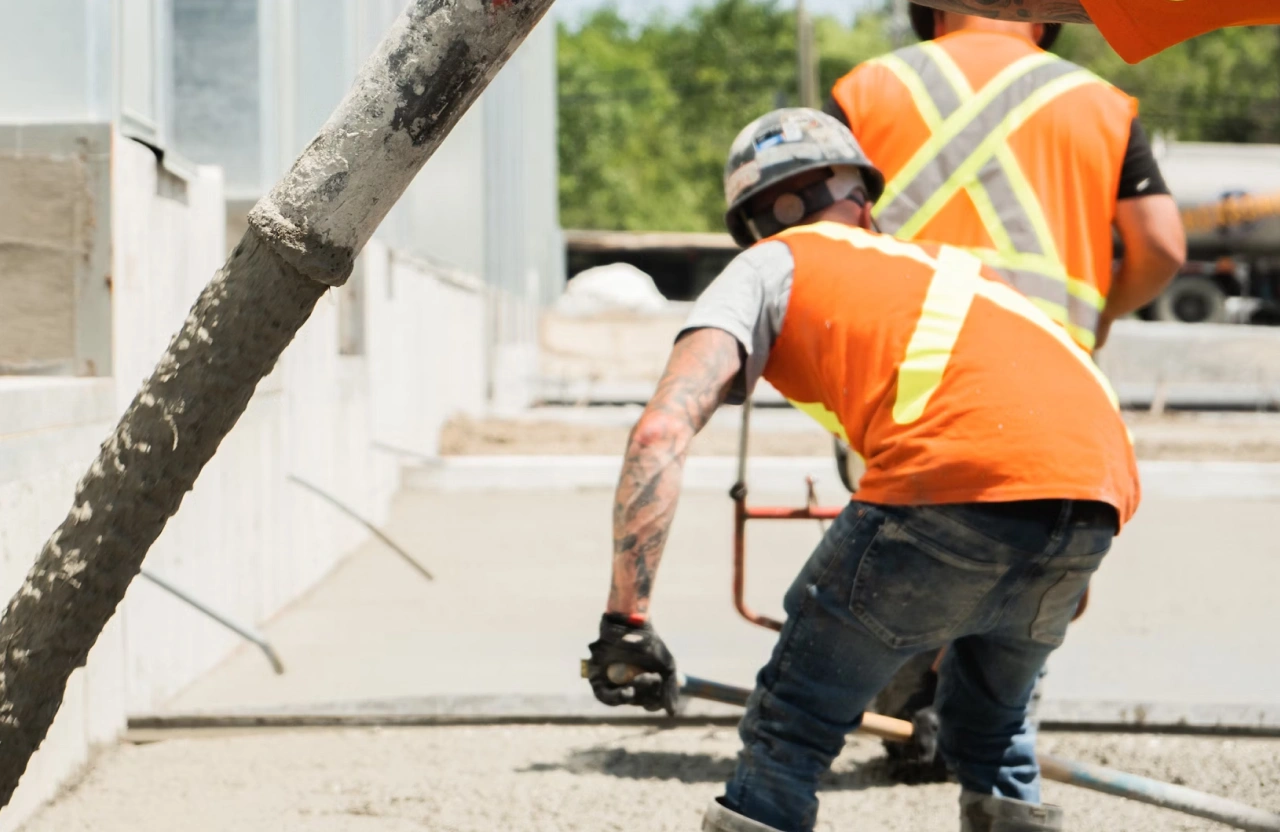
Masonry is widely used in Ontario warehouse and factory construction for its fire resistance, load-bearing capacity, durability under industrial conditions, and long-term maintenance performance. Concrete masonry units are the most common system for industrial applications, used in perimeter walls, fire separation assemblies, and equipment pads. Stone Haven Developments provides masonry construction and repair services for industrial facilities across Southwestern Ontario.
Why Is Masonry Used in Warehouses and Factories?
Masonry is used in warehouses and factories because it delivers performance characteristics that other building envelope systems cannot consistently match in industrial environments. Concrete masonry unit walls provide inherent fire resistance without additional finishing, high impact resistance from forklift and equipment contact, thermal mass that moderates interior temperature swings, and a service life that routinely exceeds 50 years with minimal maintenance. These properties make masonry a cost-effective long-term choice for industrial owners who prioritize durability over initial construction speed.
The Canada Masonry Design Centre documents masonry’s performance advantages in industrial applications, including its non-combustible classification and its ability to meet fire separation requirements mandated by building codes without additional fire-rated cladding. For facilities that handle combustible materials, manufacture goods under heat or pressure, or require fire compartmentalization between production areas, masonry offers a structurally integrated fire safety solution.
Stone Haven Developments has constructed and repaired masonry systems for industrial and commercial clients throughout Southwestern Ontario. Their commercial masonry scope includes warehouse wall systems, factory separation assemblies, and structural block work for industrial occupancy buildings.
What Types of Masonry Systems Are Used in Warehouses and Factories?
Industrial facilities use several distinct masonry systems depending on the structural role, fire rating requirement, and operational environment of each wall or assembly.
- Concrete masonry unit (CMU) walls: The most common masonry system in Ontario warehouses and factories. Available in standard, lightweight, and high-strength blocks, CMU walls can be reinforced vertically and horizontally to meet structural load requirements for tall industrial walls.
- Grouted and reinforced masonry: CMU walls filled with concrete grout and reinforced with steel rebar, used in high-load applications such as walls supporting overhead cranes, mezzanine structures, or seismic design requirements.
- Brick veneer over block: A combined system where a structural CMU wall provides the load-bearing backbone and a clay brick veneer provides the exterior face. Common in industrial facilities that require an improved exterior appearance on street-facing elevations.
- Fire separation walls: Masonry walls constructed to achieve a specific fire-resistance rating, used to separate production areas, storage zones, or occupancy groups within a factory or warehouse.
- Equipment pads and housekeeping pads: Concrete masonry or poured concrete pads that raise and protect mechanical equipment from floor-level moisture, spills, and forklift traffic inside industrial facilities.
Stone Haven’s brickwork services cover both CMU structural systems and brick veneer applications for industrial clients requiring code-compliant masonry on new builds or renovation projects.
What Are the Ontario Building Code Requirements for Industrial Masonry?
Industrial masonry in Ontario must meet the structural and fire safety requirements of the Ontario Building Code, which classifies most factories and warehouses under Group F (Industrial) occupancy. The code sets minimum fire resistance ratings for walls separating different occupancy groups and for the building envelope depending on the distance from property lines. Part 3 of the Ontario Building Code applies to most industrial buildings due to their size and occupancy class, requiring performance-based structural design rather than the prescriptive rules that apply to smaller residential and commercial buildings.
Masonry mortar in Ontario industrial construction must meet the type specifications in CAN/CSA-A179, with Type S mortar required for load-bearing below-grade applications and Type N mortar used for non-load-bearing above-grade masonry. The Ontario Building Code specifies exact mortar placement time limits based on ambient temperature, a critical constraint for masonry work during Ontario’s cold weather seasons.
Stone Haven Developments coordinates masonry construction on industrial projects with the structural engineer of record, ensuring that block type, grout fill, reinforcement, and mortar specification all meet the requirements of the approved construction drawings and the Ontario Building Code.
How Does Ontario’s Climate Affect Masonry in Industrial Buildings?
Ontario’s climate creates specific challenges for masonry in industrial buildings that contractors and facility owners must plan for throughout the life of the structure. The freeze-thaw cycle, which Ontario experiences dozens of times each winter, causes masonry mortar joints to deteriorate over time as absorbed moisture expands and contracts with temperature changes. Industrial buildings with large unheated or semi-conditioned spaces are particularly vulnerable because temperature differentials drive moisture into the wall assembly. Understanding masonry design, materials, and long-term durability considerations is essential for maintaining building performance, as outlined by the Canada Masonry Centre
Proper mortar joint profiles during construction reduce water infiltration into the wall. Raked or concave mortar joints shed water more effectively than flush joints, and brick ties and flashing details at window heads, lintels, and base conditions prevent moisture from tracking into the wall cavity. Industrial facility owners should have their masonry inspected every five to ten years to identify and repair deteriorating mortar joints before water infiltration begins causing deeper damage.
Stone Haven Developments provides masonry repair and maintenance services for industrial facilities in Southwestern Ontario. Their stone restoration and tuckpointing capabilities address the mortar deterioration patterns common in Ontario industrial buildings exposed to the province’s climate.
When Should an Industrial Facility Owner Repair or Replace Masonry?
Industrial masonry repair should be addressed when mortar joint deterioration reaches a depth of 6 millimetres or more, when brick faces are spalling, when efflorescence indicates active water infiltration, or when visible cracking in the masonry suggests movement or structural settlement. Waiting until masonry failure becomes a safety hazard significantly increases the cost and complexity of repair, as water that has been infiltrating the wall for years may have damaged the structural backup, lintel, or inner block layer that the brick veneer protects.
For industrial facilities in Ontario, the most cost-effective approach to masonry maintenance is a scheduled inspection every five years combined with prompt tuckpointing when mortar deterioration is first identified. This preventive approach costs a fraction of what emergency masonry stabilization or full wall replacement requires. Stone Haven provides masonry repair and tuckpointing services for industrial clients across Southwestern Ontario.
Industrial Masonry That Performs Over the Long Term
Masonry remains one of the most effective building envelope systems for Ontario warehouses and factories because it aligns the initial cost of construction with a long service life and low maintenance burden. The key to maximizing that value is using the right masonry system for the application, following Ontario Building Code requirements for mortar specification and structural design, and maintaining the building envelope with periodic inspection and targeted repair before small problems become large ones.
Stone Haven Developments provides masonry construction, repair, and consultation services for industrial facility owners across Southwestern Ontario. Their team understands the specific performance requirements of industrial masonry and brings the trade experience to deliver work that holds up under industrial operating conditions.
Get Industrial Masonry Support from Stone Haven Developments
Stone Haven Developments builds and repairs masonry for warehouses and factories across Southwestern Ontario. Whether your facility needs structural CMU construction for a new industrial build, tuckpointing on an aging warehouse envelope, or fire separation masonry for a facility expansion, their team brings the industrial masonry experience that these projects require. Reach out to Stone Haven for a written assessment and quote on your industrial masonry project.
Frequently Asked Questions
1. What type of masonry is used in warehouses and factories in Ontario?
Concrete masonry unit construction is the most common masonry system used in Ontario warehouses and factories, valued for its fire resistance, structural capacity, and durability under industrial conditions. CMU walls can be reinforced and grouted to meet structural load requirements and fire resistance ratings mandated by the Ontario Building Code. Stone Haven Developments provides commercial masonry and CMU construction for industrial occupancy buildings across Southwestern Ontario.
2. Does masonry meet Ontario Building Code requirements for industrial buildings?
Yes. Concrete masonry unit and structural brick masonry systems are specifically referenced in the Ontario Building Code for industrial occupancy buildings. Masonry walls can be designed to meet fire resistance ratings, structural load requirements, and occupancy separation requirements under Part 3 of the code. Stone Haven Developments coordinates masonry design with the structural engineer of record on industrial projects to ensure full compliance. Contact Stone Haven to discuss your industrial project requirements.
3. How long does masonry last in an Ontario industrial building?
Properly constructed and maintained masonry in an Ontario industrial building can last 50 to 100 years. The primary maintenance requirement is mortar joint repointing every 25 to 40 years depending on exposure conditions, mortar type, and the severity of freeze-thaw cycling the building experiences. Stone Haven Developments provides masonry repair and stone restoration services to extend the service life of industrial masonry throughout Southwestern Ontario.
4. Can masonry walls in an industrial facility be repaired without shutting down operations?
Yes. Most industrial masonry repairs, including tuckpointing, brick replacement, lintel repair, and parging, can be performed without shutting down facility operations. Work is typically sequenced by wall elevation or building zone to minimize disruption. Access staging and debris management are coordinated with facility operations. Stone Haven Developments manages industrial masonry repair through a structured project management process that accounts for active facility operations from the start.
5. How much does masonry construction cost for an Ontario warehouse or factory?
Masonry construction costs for Ontario warehouses and factories depend on wall height, block type, reinforcement requirements, and the number of openings and special conditions such as fire separation or blast walls. New CMU construction is typically costed per square metre of wall area, with reinforced and grouted walls costing more than standard single-wythe block. Contact Stone Haven for a project-specific quote based on your facility’s structural drawings and scope.
Key Takeaways
- Concrete masonry units are the most common masonry system used in Ontario warehouses and factories, valued for fire resistance, structural capacity, and durability.
- Grouted and reinforced CMU walls are used where structural loads are high, including walls supporting overhead cranes, mezzanines, or seismic design requirements.
- Ontario Building Code Part 3 applies to most industrial buildings and governs fire resistance ratings, structural load requirements, and occupancy separation for masonry assemblies.
- CAN/CSA-A179 specifies mortar type for industrial masonry, with Type S required for load-bearing below-grade applications and Type N for non-load-bearing above-grade masonry.
- Ontario’s freeze-thaw cycle causes mortar joint deterioration over time, and industrial facilities should be inspected every five years to identify and repair failing joints before water infiltration causes deeper damage.
- Masonry in Ontario industrial buildings can last 50 to 100 years with appropriate maintenance and periodic mortar repointing.
- Stone Haven Developments provides industrial masonry construction, tuckpointing, and repair services for warehouses and factories across Southwestern Ontario.