Hiring commercial brick repair contractors in Ontario requires verifying trade credentials, insurance coverage, relevant commercial project experience, and a clear understanding of the mortar specifications and repair methods the contractor will use. The wrong contractor can cause more damage than the original defect, particularly on heritage brick or occupied commercial buildings. This guide covers what to look for, what to ask, and which warning signs to take seriously before signing a contract.
Why Hiring the Right Commercial Brick Repair Contractor Matters
Commercial brick repair is not the same as residential masonry work. The scale, code requirements, insurance expectations, and technical demands of brick repair on a commercial building are significantly higher than those of a residential tuckpointing job. A contractor who has worked exclusively on residential properties is not automatically qualified to repair the facade of a multi-storey office building, a heritage commercial property, or an industrial structure with active tenants.
Poor brick repair work on a commercial building causes problems that can take years to become fully visible. Incorrectly specified mortar that is harder than the brick it surrounds will cause brick faces to spall as the mortar restrains normal movement. Incomplete joint preparation before tuckpointing allows new mortar to bond over failed material rather than replacing it, causing the repair to fail within two to three seasons. These outcomes are preventable when the right contractor is selected from the start.
Stone Haven Developments has carried out commercial brick repair on buildings across Southwestern Ontario for over 17 years. Their commercial masonry team applies correct mortar specifications, complete joint preparation, and proper joint profiles on every commercial brick repair project.
What Credentials Should a Commercial Brick Repair Contractor Have?
The first step in evaluating any commercial brick repair contractor is confirming their trade credentials and insurance coverage. In Ontario, brick and stone masonry is classified as a voluntary trade by Skilled Trades Ontario. Voluntary trade status means certification is not legally required to practice, but a contractor whose crew holds Certificates of Qualification completed the full 5,600-hour apprenticeship, including 720 hours of in-school training in materials science, mortar specification, and structural masonry.
Beyond trade certification, commercial brick repair contractors must carry commercial general liability insurance. For commercial building work, a minimum of two million dollars in liability coverage is standard, with higher limits appropriate for larger buildings or occupied multi-tenant properties. Always request the actual insurance certificate, not a verbal confirmation, and confirm that the policy includes completed operations coverage, which protects the building owner if a defect in the repair work emerges after the contractor has left the site.
WSIB clearance is also mandatory in Ontario. Any contractor who cannot produce a current WSIB clearance certificate cannot legally perform construction work on commercial properties in the province. Verify WSIB status directly through the Skilled Trades Ontario registry or the WSIB clearance portal before the project begins.
What Questions Should You Ask a Commercial Brick Repair Contractor Before Hiring?
Asking the right questions before signing a commercial brick repair contract reduces the risk of a poor outcome. The following questions should be answered clearly and specifically by any contractor you are considering.
- What mortar type will you use and why? A qualified contractor should be able to name the mortar type (Type S, Type N, or lime-based for heritage brick) and explain why that specification is appropriate for your building’s brick type and exposure condition.
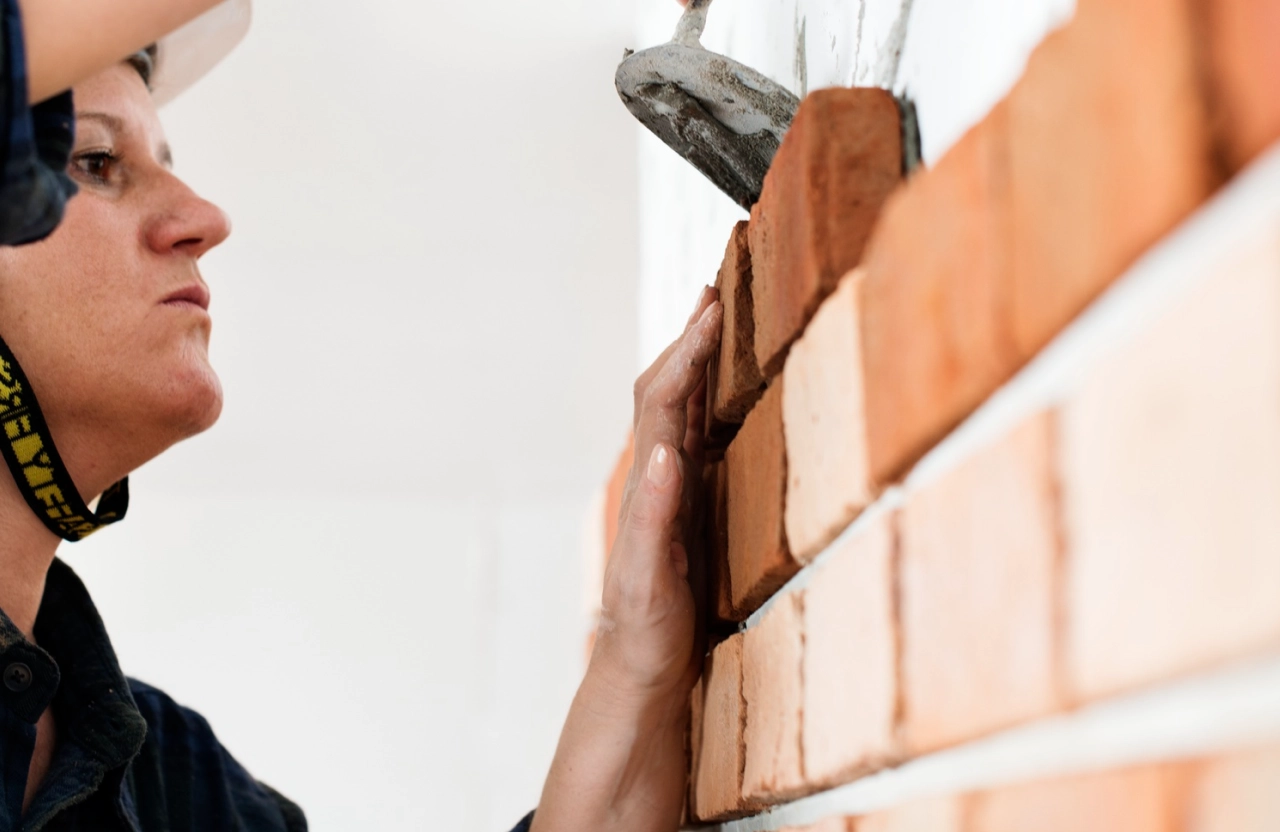
- How deep will you remove existing mortar before repointing? The industry standard for tuckpointing is a minimum removal depth of 19 millimetres (approximately three-quarters of an inch). Anything less risks bonding new mortar over failed material.
- Will you do a mock-up before full-scale repair begins? A sample repair section on an inconspicuous area lets you evaluate mortar colour match and workmanship before the contractor proceeds across the entire facade.
- How will you protect the building and tenants during the work? Scaffolding plans, debris containment, dust and water management, and working hour restrictions should all be addressed before the contract is signed.
- What warranty do you provide on the repair work? A minimum two-year warranty on mortar joint repairs is reasonable, covering both material failure and workmanship defects.
Stone Haven Developments addresses all of these points in their project proposals and provides construction consulting to building owners who want an independent assessment of their brick repair scope before approaching contractors.
What Red Flags Should You Watch for When Hiring a Brick Repair Contractor?
Several warning signs consistently appear in contractor selection processes for commercial brick repair. Recognizing them before signing protects building owners from costly mistakes.
- No site visit before quoting: Any contractor who quotes a commercial brick repair project without physically inspecting the building is estimating blind. Facade deterioration varies significantly across a building, and quotes produced without a site visit almost always miss scope items that will be added as change orders once work begins.
- Vague or single-line quotes: A quote that does not specify mortar type, removal depth, joint preparation method, or number of linear metres of repointing covered provides no basis for comparison or accountability. Insist on itemized quotes.
- Inability to provide insurance certificates promptly: Any delay or difficulty producing a current insurance certificate is a serious warning sign. Legitimate commercial contractors maintain current coverage and can provide certificates within 24 hours.
- No experience with your building type: A contractor whose portfolio consists entirely of residential brick homes is not necessarily qualified for commercial facade work. Ask specifically for examples of commercial buildings, not residential references.
- Pressure to start immediately without a signed contract: No reputable commercial contractor will begin work on a commercial building without a signed contract specifying scope, price, payment schedule, and warranty terms.
For guidance on evaluating masonry contractors more broadly, Stone Haven Developments has published contractor selection guidance relevant to commercial building owners in Ontario.
How Do Mortar Specifications Affect Commercial Brick Repair Quality?
Mortar specification is one of the most technically consequential decisions in any commercial brick repair project. Using mortar that is too hard relative to the brick will cause brick face spalling as temperature and moisture drive movement through the wall assembly. The mortar, being stronger than the brick, forces the brick to absorb all movement stress rather than distributing it through the joint. This is a common and expensive mistake made by contractors who apply modern Portland cement mortars to pre-1950 brick that was originally laid in lime mortar.
The Canada Masonry Design Centre publishes guidance on mortar type selection aligned with CSA A179, the Canadian standard for masonry mortar and grout. A qualified commercial brick repair contractor will be familiar with these specifications and will select mortar based on the brick’s compressive strength, the wall’s exposure condition, and whether the building carries a heritage designation that requires lime mortar compatibility.
Stone Haven Developments specifies and applies correct mortar for every commercial brick repair project. Their masonry team has experience with both modern CSA-compliant mortars and heritage lime-compatible formulations used on pre-Portland brick buildings across Southwestern Ontario.
Choosing a Commercial Brick Repair Contractor Protects Your Building
The process of hiring a commercial brick repair contractor is as important as the repair work itself. Verified credentials, itemized proposals, correct mortar specification, and a clear warranty protect the building owner from poor workmanship and recurring repair costs. A contractor who cannot answer basic questions about mortar type, joint preparation depth, or insurance coverage should not be trusted with a commercial building facade.
Understanding proper building practices, material performance, and repair considerations helps property owners make informed decisions when selecting a contractor. Industry resources from the Canadian Construction Association provide information related to construction practices, industry standards, and professional development within Canada’s construction sector.
Stone Haven Developments provides commercial brick repair services across Southwestern Ontario with the trade credentials, insurance coverage, and commercial project experience that building owners and property managers should require before signing any brick repair contract.
Get a Written Proposal from Stone Haven Developments
Stone Haven Developments provides commercial brick repair services for office buildings, retail properties, industrial facilities, and heritage commercial properties across Southwestern Ontario. Their team carries the required trade credentials, commercial liability insurance, and WSIB clearance that legitimate commercial brick repair requires. Contact Stone Haven for a detailed written proposal that specifies mortar type, joint preparation method, scope of work, and warranty terms clearly.
Frequently Asked Questions
1. How do I verify a commercial brick repair contractor’s credentials in Ontario?
Request a Certificate of Qualification in Brick and Stone Mason from Skilled Trades Ontario, a current commercial general liability insurance certificate with completed operations coverage, and a current WSIB clearance certificate. Verify the WSIB status through the provincial online portal before work begins. Stone Haven Developments provides all required documentation upfront and encourages building owners to verify credentials through Skilled Trades Ontario before making any hiring decision.
2. What is the correct mortar removal depth for commercial brick tuckpointing?
The industry standard minimum mortar removal depth for commercial tuckpointing is 19 millimetres, approximately three-quarters of an inch. Removing less than this depth risks bonding new mortar over failed material, which causes the repair to fail within a few seasons. Mortar must be removed by saw-cutting or hand chiseling, and joint faces must be clean and free of dust before new mortar is applied. Stone Haven’s brickwork services follow this standard on every commercial tuckpointing project.
3. How long does commercial brick repair typically last in Ontario?
Commercial brick repair using correctly specified and properly applied mortar typically lasts 25 to 40 years before repointing is again required. Heritage lime mortar repairs may have a shorter repointing cycle of 15 to 25 years depending on exposure conditions. Poor mortar selection or inadequate joint preparation can reduce the service life of a repair to under five years. Properly maintained masonry can last generations. Contact Stone Haven for an assessment of your building’s current masonry condition.
4. What is the difference between tuckpointing and repointing on a commercial building?
Repointing refers to the complete removal and replacement of deteriorated mortar joints across a wall or building elevation. Tuckpointing is sometimes used interchangeably with repointing, but in the traditional British definition it refers to a decorative technique of applying a fine line of white putty over coloured mortar to create the appearance of fine joints. In Ontario commercial masonry, repointing is the correct term for the structural repair process. Stone Haven Developments performs commercial masonry repointing across Southwestern Ontario.
5. Can commercial brick repair be done on an occupied building in Ontario?
Yes. Commercial brick repair including repointing, brick replacement, and lintel repair can typically be performed on occupied commercial buildings with proper scaffolding, debris containment, and coordination with building management. Exterior masonry work generally does not require interior access and can proceed without disrupting tenants. Stone Haven Developments manages commercial brick repair on occupied buildings through a structured project management approach that minimizes disruption to building operations.
Key Takeaways
- Commercial brick repair contractors in Ontario should hold Certificates of Qualification from Skilled Trades Ontario, current commercial general liability insurance with completed operations coverage, and a valid WSIB clearance certificate.
- The minimum mortar removal depth for commercial tuckpointing is 19 millimetres. Less than this risks bonding new mortar over failed material, causing premature repair failure.
- Mortar specification must match the brick type and original construction period. Using Portland cement mortar on pre-1950 lime mortar brick causes brick face spalling over time.
- Red flags when hiring a commercial brick repair contractor include no site visit before quoting, vague single-line proposals, inability to produce insurance documents, and pressure to start without a signed contract.
- A two-year minimum warranty on commercial brick repair work is a reasonable expectation and should be included in the signed contract.
- Correctly specified and applied commercial brick mortar repair lasts 25 to 40 years before repointing is required again.
- Stone Haven Developments provides commercial brick repair services across Southwestern Ontario with verified credentials, itemized proposals, and correct mortar specifications.