A gas fireplace offers higher heating efficiency and lower maintenance, while a wood burning masonry fireplace offers the traditional flame, sound, and resale appeal that many Ontario homeowners want. The right choice depends on whether the priority is convenience or authentic ambiance, since both require different masonry work to install correctly.
Why Does This Choice Matter for a Masonry Project?
This choice matters because a gas fireplace and a wood burning fireplace require different masonry scopes, different venting, and different long-term maintenance commitments. A homeowner renovating a living room or planning new construction needs to settle this question early, since the chimney, firebox, and hearth are built differently depending on the fuel type chosen.
Many property owners across Stratford, Kitchener, and Waterloo Region assume the decision is purely cosmetic. In practice, it determines whether a full masonry chimney is required, what materials the firebox needs, and how much annual maintenance the homeowner is signing up for.
What Is the Difference Between a Gas Fireplace and a Wood Burning Masonry Fireplace?
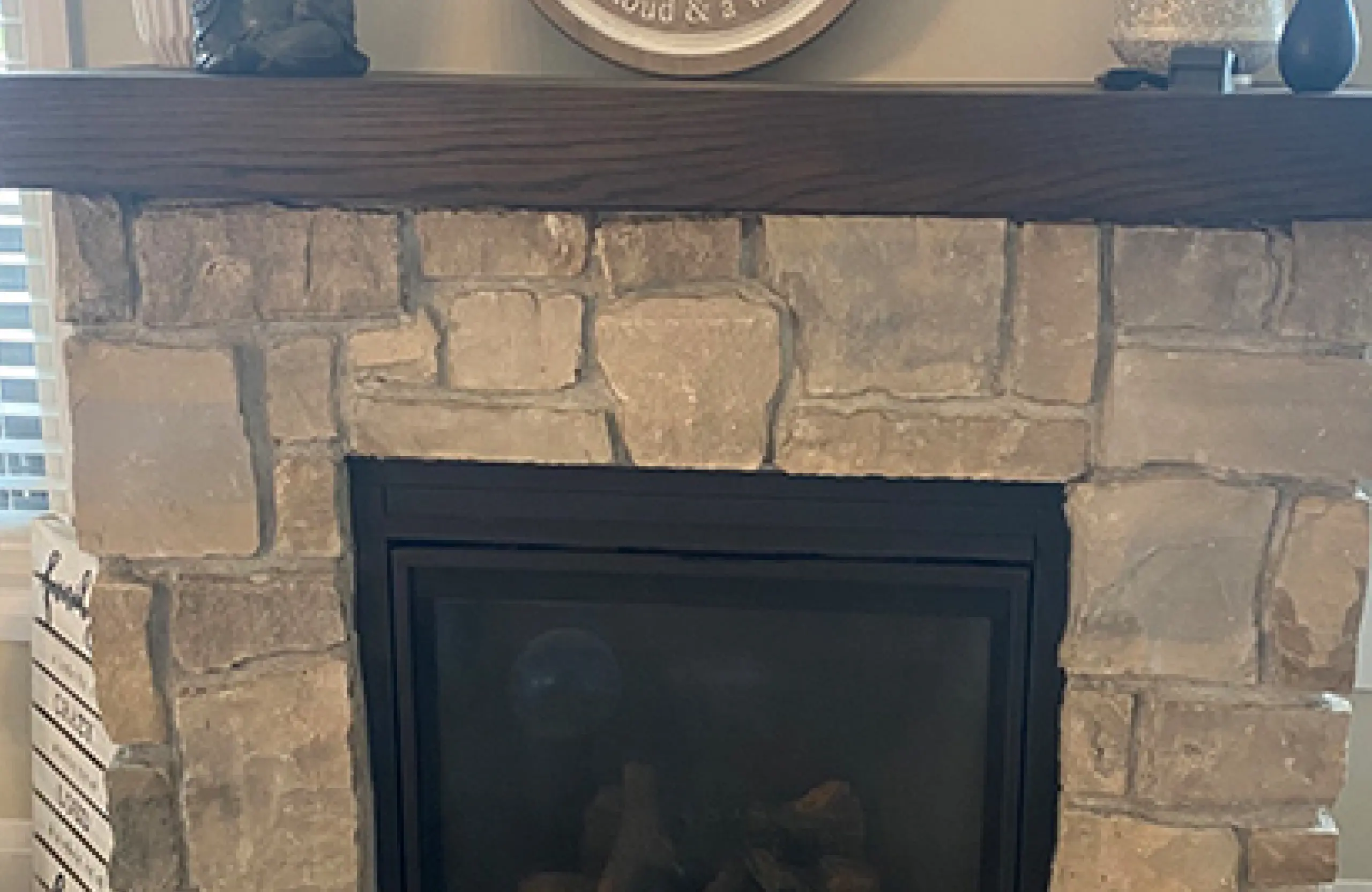
A wood burning masonry fireplace uses a built brick or stone firebox connected to a full masonry chimney, while a gas fireplace burns natural gas or propane through a smaller vent pipe that does not always require traditional masonry construction. Both can be built into existing masonry, but a gas conversion or insert typically needs far less structural work.
Wood burning units rely entirely on masonry for safe operation, since the firebox, smoke chamber, and flue must all be sized correctly to handle combustion byproducts. Gas units can sometimes be installed without a traditional chimney at all, using direct vent technology instead.
How Do Gas and Wood Burning Fireplaces Compare on Efficiency?
Gas fireplaces are generally more efficient than wood burning units, with direct vent gas models reaching efficiency ratings as high as 90 percent compared to roughly 10 to 30 percent for a traditional open masonry fireplace. This efficiency gap exists because wood burning fireplaces lose a significant amount of heat up the chimney along with the smoke.
Despite the lower efficiency rating, many homeowners still value a wood burning fireplace for the heat it produces in the immediate room, along with the ambiance that a gas flame cannot fully replicate.
How Do Maintenance Requirements Compare?
Wood burning masonry fireplaces require more maintenance than gas units, including annual chimney sweeping to remove creosote buildup and periodic liner or flue inspections. Gas fireplaces need only an annual inspection of the vent pipe and connections, since they do not produce ash, soot, or creosote.
Creosote buildup in a wood burning chimney is a genuine fire hazard if left unaddressed, which is why a working relationship with a chimney repair professional matters for any household that uses a wood fireplace regularly.
What Does Each Option Cost to Install in Ontario?
A wood burning masonry fireplace typically costs more to install than a gas fireplace because it requires a full chimney, firebox, and hearth built from brick or stone. A gas fireplace insert or direct vent unit generally has a lower installation cost since it avoids the structural masonry work a wood fireplace demands.
Exact pricing depends heavily on site conditions and material choice. Our masonry cost guide for Ontario projects breaks down how material, height, and labour complexity affect the final number for any masonry fireplace or chimney build.
Which Option Adds More Value for Resale?
Both gas and wood burning fireplaces tend to add value to a home, since most buyers view any working fireplace as a desirable feature. A traditional wood burning masonry fireplace often carries slightly more perceived value in older or heritage-style homes, while a gas fireplace appeals to buyers prioritizing low-maintenance convenience.
Which Fireplace Type Is Right for Your Home?
A wood burning masonry fireplace suits homeowners who want the authentic experience of a real fire and are willing to manage the upkeep that comes with it. A gas fireplace suits homeowners prioritizing convenience, consistent heat output, and lower long-term maintenance.
- Choose wood burning if ambiance, sound, and heat radius matter most
- Choose gas if convenience and lower maintenance are the priority
- Consider your existing chimney structure before committing to either option
- Factor in annual maintenance costs over the life of the fireplace
How Does Stone Haven Developments Support Fireplace and Chimney Projects?
Stone Haven Developments brings 17 years of masonry experience to fireplace and chimney projects across Stratford, Perth County, and Waterloo Region, including brickwork and masonry services for new wood burning fireplace construction and chimney work to support either fuel type.
For homeowners building new, our new construction masonry services cover firebox and chimney construction from the ground up, while existing chimneys converting between fuel types often benefit from a review of current chimney repair needs before the conversion proceeds.
Why Choose Stone Haven Developments for Your Fireplace Project?
Stone Haven Developments was founded by Matthew Howe, who brings over 17 years of hands-on masonry experience from union and independent work across Toronto and the Waterloo Region. That experience spans new fireplace construction and the restoration of older chimneys that need work before a fuel conversion can proceed safely.
Every fireplace and chimney quote is based on an actual site assessment rather than a generic estimate, which keeps homeowners informed about real costs before committing to either fuel type.
Choosing Between Gas and Wood for Your Next Fireplace
Gas fireplaces offer efficiency and low maintenance, while wood burning masonry fireplaces offer authentic ambiance and heat at the cost of more upkeep. Either choice involves masonry work, whether that means a full chimney build or modifications to support a gas insert.
If you are weighing the two options for a renovation or new build, contact Stone Haven Developments to discuss what your existing structure supports and what each option would involve.
Frequently Asked Questions
1. Can I convert a wood burning fireplace to gas?
Most wood burning fireplaces can be converted to gas using a gas insert, provided the existing chimney and flue are in good condition. A professional inspection should confirm the chimney can safely support the conversion before installation begins.
2. Which is cheaper to operate, gas or wood?
Wood is often cheaper to operate if you have access to affordable firewood, while gas offers more predictable monthly costs tied to utility rates. The total cost comparison depends heavily on local wood prices and natural gas rates in your area.
3. Do gas fireplaces need a chimney?
Many gas fireplaces use direct vent technology and do not require a traditional masonry chimney, venting instead through a wall or smaller pipe. Existing masonry chimneys can still be used for gas inserts when the homeowner prefers to keep the original structure.
4. How often does a wood burning chimney need cleaning?
A wood burning chimney should be inspected and swept at least once a year to remove creosote buildup and check for liner damage. Households that use their fireplace frequently may need more regular sweeping to keep creosote levels safe.
5. Is a masonry fireplace more expensive to build than a gas unit?
A masonry wood burning fireplace generally costs more to build than a gas fireplace because it requires a full chimney, firebox, and hearth construction. Gas units, particularly direct vent models, often install with less structural masonry work involved.
Plan Your Fireplace Project With Confidence
If you are deciding between gas and wood for your next fireplace project, reach out to Stone Haven Developments to schedule a consultation and get a clear picture of what each option involves for your home.
Key Takeaways
- Gas fireplaces offer higher efficiency and lower maintenance than wood burning masonry fireplaces.
- Wood burning fireplaces provide authentic ambiance but require annual chimney sweeping and more upkeep.
- Installation cost is typically higher for wood burning units because of the masonry work required.
- Both fuel types can add resale value, with preference often tied to home style and buyer priorities.
- A site assessment from a qualified mason is the best way to determine which option suits your existing structure.